


Building Solar Systems That Stand the Test of Nature:
How Wind and Snow Shape Rooftop PV Systems
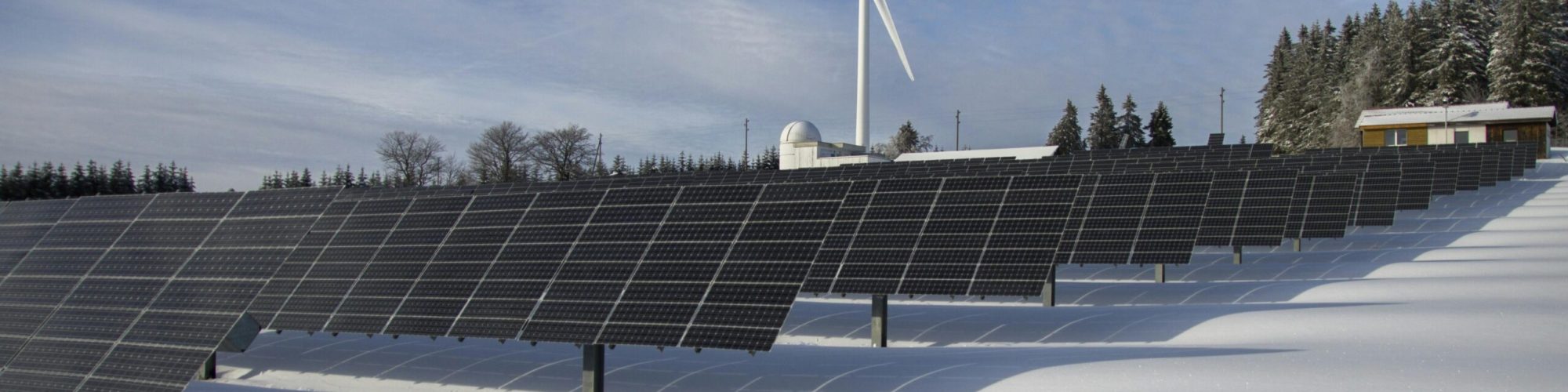
When we think of solar design, we often focus on sunlight — but some of the most critical engineering work happens in response to wind and snow.
These environmental forces don’t just influence energy production; they directly impact safety, durability, and system performance.
The Role of Virto.CAD and Virto.CORE
Virto Solar supports this engineering rigor with a dual-tool ecosystem: Virto.CAD and Virto.CORE.
Virto.CAD is a high-performance plugin for AutoCAD and BricsCAD that streamlines PV layout, structural checks, and bill-of-materials generation.
Meanwhile, Virto.CORE is a modular framework for mounting manufacturers and wholesalers to deploy white-label web apps that encapsulate the same engineering logic, enabling partners to run instant, validated designs in the browser. This ensures that the same engineered standards travel from desktop to web, from design offices to partner portals.
The Foundation: Eurocode Standards
The Eurocode (EN 1991) is the benchmark for structural design across Europe. It defines how to calculate environmental actions – such as wind and snow loads – on buildings and structures.
Each European country adds its own National Annex (NA), fine-tuning factors like:
- Basic wind speed maps
- Snow load zones
- Terrain roughness categories
- Orography (hilly topography)
- Return periods (the statistical likelihood of extreme weather events)
Virto Solar has digitized these parameters across Europe, integrating them into our proprietary calculation tools. This allows our engineers to determine site-specific load conditions with precision – no guesswork, no shortcuts.

Understanding Wind Loads
The key concept in wind design is the peak velocity pressure, noted as q<sub>p,z</sub> in the Eurocode.
This value depends on five main variables:
- Basic wind speed (varies by region and country)
- Reference height (including parapets, not just roof surface)
- Terrain category (how open or rough the surrounding area is)
- Orography (hills, slopes, or cliffs that accelerate wind)
- Return period (e.g., 25 years for PV systems, 50 for higher safety margins)
Even small misinterpretations – such as using the roof surface height instead of the top of the building – can lead to incorrect load assumptions and potential risks.
Snow Loads: The Hidden Structural Challenge
Snow loads can quietly compromise a system’s long-term performance.
While most building roofs are designed with a certain snow reserve, PV modules and support structures face their own challenges:
- Heavy snow accumulation can cause glass or cell cracking (often invisible microcracks).
- Long-term exposure can lead to gradual power degradation.
- Snow can deform structures if support spacing isn’t optimized.
That’s why Virto Solar designs every system according to local snow zones, altitude, and roof pitch – balancing efficiency with safety.

How We Calculate Ballast for Flat Roofs
For flat roofs, wind and snow translate into one key design question: How much ballast is needed to keep the system stable – without overloading the structure?
At Virto Solar, we combine simulation and testing in a six-step approach:
Wind tunnel testing – Physical testing at various wind angles.
Mechanical lift testing – Verifying system stiffness and coupling between modules.
Roof and panel zoning – Identifying high-pressure edge and corner zones.
Peak pressure application – Applying real environmental data to simulation results.
Friction coefficient assessment – Measuring the friction between the mounting system and the roof membrane, ideally both in dry and wet conditions. The lowest value is used in ballast calculations to ensure safety under all circumstances.
Ballast optimization – Distributing weight efficiently across the structure.
By using aerodynamic mounting designs, validated test data, and accurate friction measurements, our engineers often reduce required ballast by up to 30%, protecting both system stability and roof integrity.
Roof and Panel Zoning: Smart Weight Where It Matters
Not all parts of a roof experience the same wind intensity.
- Corners and edges face higher uplift forces.
- Central areas experience more stable pressure conditions.
- Within each PV array, panel zones (edge, middle, sheltered) determine how much ballast each module requires.
Our analysis shows that East–West configurations perform better aerodynamically than traditional South-facing arrays.
Since wind typically comes from the west, East–West systems create less resistance and turbulence, enabling lighter, more balanced ballast layouts.
Typical ranges:
- East–West systems: 10–20 kg/m²
- South-facing systems: 15-25 kg/m²
When Roof Load Limits Are Tight
Older or lightweight roofs often have strict load capacity limits – sometimes no more than 15 kg/m².
When that happens, our engineers explore several optimization strategies:
- Switch to East–West mounting to reduce uplift.
- Increase row spacing (pitch) to distribute loads over a larger area.
- Integrate anchors to replace ballast in key positions.
- Reorient panels to align loads with stronger roof directions.
- In rare cases, reinforce the structure with rooftop beams between trusses.
Each solution is customized to maintain safety while achieving the project’s energy goals.
Checking Point Loads: Protecting the Roof Surface
Every kilogram of ballast ultimately presses on specific contact points – usually small rubber or plastic feet.
If the pressure is too high, it can damage membranes or compress insulation.
We verify each system’s point loads (in kPa or kN/m²) against roof material specifications, ensuring long-term durability.
This careful attention to contact pressure is one of the small but crucial details that defines a Virto Solar installation.
Engineering for Consistency
Our long-term goal at Virto Solar is to establish a standardized theoretical ballast calculation method across all client projects.
By aligning wind tunnel protocols, lift test methods, and calculation models, we’re developing a reusable framework that ensures:
- Consistency across designs
- Compatibility with future software automation
- Transparent and verifiable safety margins
This standardized approach allows us to deliver SaaS-ready design solutions for smaller PV manufacturers while maintaining large-scale engineering rigor.
Key Takeaways
- Environmental design is non-negotiable. Accurate wind and snow load calculations are essential for safety and longevity.
- Aerodynamics matter. East–West systems naturally reduce wind loads.
- Testing validates theory. Wind tunnels and lift tests ensure real-world performance.
- Protect the roof. Always check point loads and membrane limits.
When in doubt, stay conservative. Safety factors exist for a reason.