
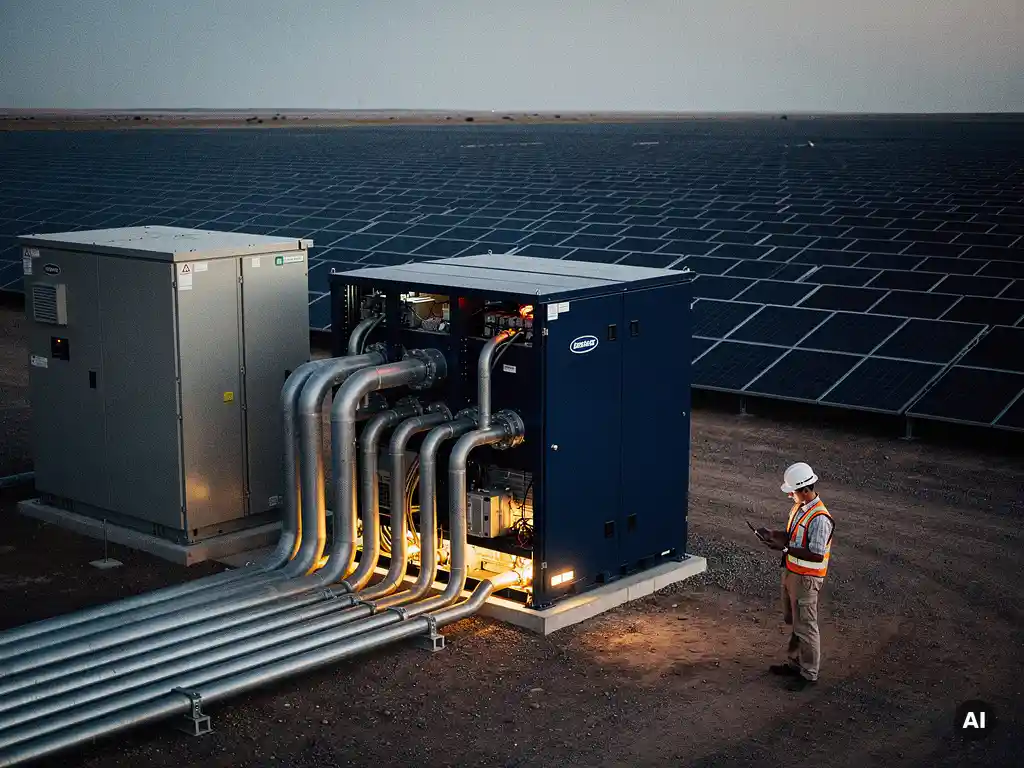

Battery storage plays a direct role in peak shaving by discharging stored energy during the hours when a facility’s electricity demand is highest, reducing the peak load drawn from the grid. This matters because utility tariffs for commercial and industrial customers typically include a demand charge component calculated on the highest 15- or 30-minute interval of consumption recorded during a billing period. By flattening that peak, a battery system can meaningfully cut monthly electricity costs. The sections below unpack exactly how this works, what system size you need, and when the economics actually stack up.
How does battery storage actually reduce peak demand charges?
Battery storage reduces peak demand charges by detecting when a facility’s power draw is approaching its peak threshold and automatically discharging stored energy to supplement grid supply. Instead of pulling the full load from the utility, the building draws a combination of grid power and battery power, keeping the metered demand below the level that would trigger a higher charge. Because demand charges are typically billed on a single highest interval per month, even one avoided spike can produce significant savings.
The mechanism relies on a battery management system or energy management software that continuously monitors real-time consumption. When demand approaches a predefined setpoint, the system dispatches the battery. The battery then recharges during off-peak hours when electricity is cheaper and grid demand is low. This cycle repeats throughout the month, consistently keeping the facility’s demand profile flat.
The financial impact depends on how aggressively a site’s demand charges are structured. In many commercial and industrial tariffs, demand charges can represent anywhere from 30 to 50 percent of a total electricity bill, making even modest reductions in peak demand financially significant. The battery does not need to eliminate the peak entirely; it only needs to shave it below the threshold that triggers the highest charge tier.
What size battery system is needed for effective peak shaving?
The right battery system size for peak shaving depends on three factors: the magnitude of the demand peaks you want to shave, the duration of those peaks, and the frequency with which they occur. A system must have enough power capacity (measured in kilowatts) to offset the peak demand gap, and enough energy capacity (measured in kilowatt-hours) to sustain that output for the full duration of the peak window.
A practical starting point is to analyze at least 12 months of interval meter data, ideally at 15-minute resolution. This reveals not just how high the peaks are, but how long they last and whether they cluster at predictable times such as morning startup or afternoon cooling loads. A peak that lasts 30 minutes requires far less energy storage than one that persists for two hours at the same power level.
As a rough framework, if a facility regularly spikes 200 kW above its target demand setpoint for periods of up to one hour, the battery system needs at least 200 kW of discharge power and 200 kWh of usable energy capacity. Real-world sizing also accounts for battery round-trip efficiency, depth-of-discharge limits, and a safety margin to handle unexpected demand events. Oversizing slightly is common practice because the cost of missing a single peak event and incurring a full demand charge can outweigh the marginal cost of additional storage capacity.
What’s the difference between peak shaving and load shifting?
Peak shaving and load shifting are related but distinct strategies. Peak shaving focuses specifically on reducing the maximum demand a facility draws from the grid at any given moment, primarily to avoid demand charges. Load shifting, by contrast, moves energy consumption from expensive high-tariff periods to cheaper low-tariff periods, targeting energy cost savings rather than demand charge reduction. Both strategies use battery storage, but they optimize for different cost components on an electricity bill.
Peak shaving in practice
In a peak shaving strategy, the battery discharges whenever real-time demand exceeds a target threshold, regardless of the time of day or the prevailing energy rate. The goal is purely to keep the metered demand reading below a specific level. The battery recharges when demand drops, typically during overnight hours or midday when loads are lower.
Load shifting in practice
Load shifting operates on a time-of-use logic. The battery charges during periods when grid electricity is cheapest, often at night or during solar generation hours, and discharges during peak-rate periods when electricity prices are highest. The savings come from the price differential between charge and discharge periods, not from reducing a demand peak per se.
In practice, many commercial battery systems combine both strategies simultaneously. A well-configured energy management system can prioritize peak shaving to protect against demand charges while also optimizing charge and discharge timing to capture time-of-use savings. Understanding which cost driver is larger at a specific site determines which strategy should take priority in the dispatch logic.
How does solar PV integration affect battery peak shaving performance?
Integrating solar PV with battery storage can significantly improve peak shaving performance by giving the battery a low-cost local energy source to recharge from during daylight hours. Instead of relying solely on off-peak grid power to fill the battery, a solar-plus-storage system can replenish storage capacity mid-day, making the battery available for afternoon demand peaks that are common in commercial facilities with heavy cooling loads.
The interaction between solar generation and battery dispatch requires careful coordination. If the solar array is large enough to directly suppress demand peaks during daylight hours, the battery can be reserved for morning peaks before solar generation ramps up, or for evening peaks after solar output drops. This division of labor extends the effective coverage of the storage system across a longer window of the day.
However, solar variability introduces complexity. On cloudy days, solar output may be insufficient to recharge the battery between morning and afternoon peak events, leaving the system with reduced capacity for the second peak. Accurate energy forecasting and adaptive dispatch algorithms are essential to manage this risk. Systems that integrate weather-adjusted forecasting into their control logic consistently outperform those using fixed dispatch schedules.
For engineering teams designing solar-plus-storage projects, the interaction between PV yield, battery state of charge, and demand profiles must be modeled carefully. Tools that handle PV system design and yield simulation alongside storage dispatch modeling reduce the risk of undersizing the combined system. If you want to explore how solar design software can support this kind of integrated analysis, the right platform will handle both the PV layout and the downstream engineering calculations in one environment.
When does peak shaving with batteries make financial sense?
Peak shaving with batteries makes financial sense when a facility faces high demand charges, has predictable and recurring demand peaks, and can achieve a payback period that aligns with the battery system’s useful life. The economics are most compelling for commercial and industrial customers where demand charges represent a large share of the total electricity bill and where peaks are concentrated enough that a battery can reliably intercept them.
Several conditions strengthen the business case:
- High demand charge rates: Sites in regions where demand charges exceed a meaningful threshold per kilowatt per month see faster payback because each kilowatt of shaved demand generates more savings.
- Predictable peak patterns: Facilities with consistent, foreseeable demand spikes, such as manufacturing plants with scheduled shift startups or commercial buildings with predictable HVAC cycles, are easier to optimize than sites with erratic load profiles.
- Coincident solar generation: When solar PV is already on-site or planned, the combined system economics improve because the battery can be recharged at near-zero marginal cost during daylight hours.
- Available incentives: In 2026, several markets continue to offer investment tax credits, accelerated depreciation, or grid services revenue opportunities that can materially shorten payback periods for commercial battery installations.
Conversely, peak shaving is a weaker fit for sites with flat, unpredictable load profiles, very low demand charge rates, or peaks that are too long in duration for a cost-effective battery to cover. A thorough financial model using actual interval meter data is the only reliable way to determine whether the investment is justified at a specific site.
If you are evaluating a solar-plus-storage project and want to understand how the engineering design phase fits into the overall business case, reaching out to our team is a practical next step for getting the analysis right from the start.
Frequently Asked Questions
How do I get started with assessing whether my facility is a good candidate for battery peak shaving?
The best starting point is pulling 12 months of interval meter data at 15-minute resolution from your utility and identifying the frequency, magnitude, and duration of your demand peaks. Look specifically at how often your highest peaks occur and whether they follow a predictable pattern — recurring peaks are far easier and more cost-effective to shave than random spikes. From there, compare your demand charge rate (in $/kW/month) against a rough battery sizing estimate to get an early read on whether the economics are likely to pencil out before investing in a full feasibility study.
What happens if the battery isn't fully charged when a demand peak occurs?
If the battery's state of charge is insufficient when a peak event begins, it may only partially shave the peak, meaning your metered demand could still exceed your target setpoint and trigger a higher demand charge. This is why dispatch logic and charge scheduling are critical — the system must prioritize ensuring the battery is adequately charged ahead of predictable peak windows. For sites with solar-plus-storage, this risk is compounded on cloudy days, making weather-adjusted forecasting and adaptive control algorithms essential rather than optional.
Can a battery system participate in grid services programs while also performing peak shaving?
Yes, but the two objectives can conflict if not carefully managed. Grid services programs like demand response or frequency regulation may call on the battery to discharge or withhold capacity at times that don't align with your on-site peak shaving needs, potentially leaving the battery unavailable when you need it most. Many commercial energy management platforms allow you to set a minimum state-of-charge reserve that protects peak shaving capacity before making the remainder available for grid services — this stacking approach can improve overall project economics, but it requires a well-configured dispatch strategy and a clear understanding of your utility's program rules.
How long do commercial battery systems typically last, and how does degradation affect peak shaving performance over time?
Most commercial lithium-ion battery systems are warranted for 10 to 15 years, with capacity degradation typically ranging from 20 to 30 percent over that period depending on cycle frequency, depth of discharge, and operating temperature. As the battery loses usable capacity, its ability to shave the same magnitude of peak diminishes unless the dispatch setpoint is adjusted to compensate. Factoring degradation into your financial model from the outset — rather than assuming constant performance — gives you a more accurate picture of long-term savings and helps you determine whether the system remains cost-effective through its full useful life.
What are the most common mistakes made when sizing a battery system for peak shaving?
The most frequent mistake is sizing the system based on average peak demand rather than the worst-case peaks that actually determine the demand charge — utilities bill on the single highest interval, so the outlier events matter most. Another common error is underestimating peak duration, which leads to a system with adequate power capacity (kW) but insufficient energy capacity (kWh) to sustain discharge through the full peak window. Finally, many projects fail to account for battery round-trip efficiency losses and depth-of-discharge limits, which can reduce effective usable capacity by 10 to 20 percent compared to nameplate ratings.
Is peak shaving with batteries still viable if my facility doesn't have solar panels installed?
Absolutely — battery peak shaving works independently of solar and can be a strong standalone investment for facilities with high demand charges and predictable load patterns. Without solar, the battery recharges exclusively from the grid during off-peak hours, which is a well-established and reliable approach. The economics are simply different: solar-plus-storage benefits from near-zero recharging costs during daylight hours, while a standalone battery system's savings come entirely from demand charge reduction, so the demand charge rate at your site becomes an even more critical factor in determining viability.
How do demand charge structures vary between utilities, and why does it matter for peak shaving ROI?
Demand charge structures vary significantly — some utilities charge a flat rate per kW based on the monthly peak, while others use ratchet clauses that bill based on a percentage of the highest peak recorded over the past 12 months, making a single bad month costly for an entire year. Others apply coincident demand charges tied to the utility's system-wide peak rather than your facility's individual peak, which requires a different dispatch strategy to capture savings. Understanding the exact structure of your tariff before sizing and configuring a battery system is essential, because a strategy optimized for one tariff type can significantly underperform under a different billing structure.
Related Articles
- How do you update a wiring diagram after a design change?
- How do you show cable tray routing in a wiring diagram?
- What is the round-trip efficiency of a BESS?
- What is the difference between PV design software and general CAD tools?
- How does PV design software work for large-scale solar projects?
This content was generated with the help of AI — it may contain mistakes