
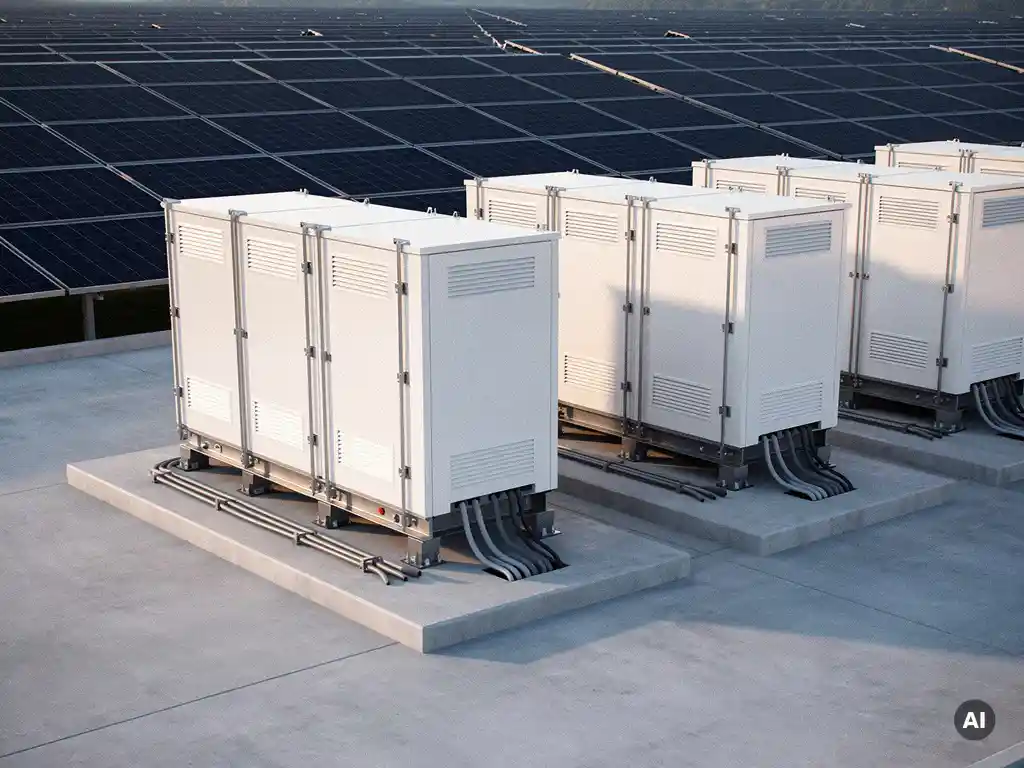

The cost of battery storage systems typically ranges from a few thousand dollars for a small residential unit to several million dollars for utility-scale installations. The price you pay depends primarily on system capacity, battery chemistry, installation complexity, and whether the system is paired with solar. This article breaks down costs by system type, explains what drives pricing, and covers the incentives and financial conditions that determine when battery storage makes economic sense.
What factors determine the cost of a battery storage system?
The cost of a battery storage system is determined by several interconnected factors: battery chemistry, usable capacity (measured in kWh), power output (measured in kW), installation complexity, inverter type, and the software or monitoring systems included. No single factor drives the price alone; the combination of these variables defines what you ultimately pay.
Battery chemistry is one of the most significant cost drivers. Lithium iron phosphate (LFP) batteries have become the dominant choice for both residential and commercial applications because they offer a strong balance of safety, cycle life, and cost. Other chemistries, such as nickel manganese cobalt (NMC) or flow batteries, may be preferred in specific applications but often carry different price profiles. As manufacturing scale has increased, lithium-ion battery costs have fallen substantially over the past decade, making storage more accessible across project types.
System capacity is the other major variable. A larger battery bank stores more energy, which means more hardware, more installation labor, and more complex electrical integration. For commercial and utility-scale projects, additional costs arise from grid interconnection studies, protection relays, transformer upgrades, and permitting. The more complex the electrical environment, the higher the balance-of-system costs relative to the battery hardware itself.
Other factors that influence total cost include:
- Inverter type: AC-coupled systems require a separate battery inverter, while DC-coupled systems integrate more tightly with the solar array but require careful sizing
- Installation location: Indoor versus outdoor enclosures, seismic requirements, and climate conditions all affect hardware and labor costs
- Warranty and cycle life: Systems with longer warranties or higher cycle counts typically cost more upfront but deliver better long-term value
- Monitoring and controls: Advanced energy management systems (EMS) add cost but are often essential for commercial applications where peak demand shaving or grid services are part of the business case
How much does a residential battery storage system cost?
A residential battery storage system typically costs between $8,000 and $20,000 fully installed, depending on capacity and brand. Most homeowners install systems in the 10 to 15 kWh range, which covers essential loads during a grid outage or enables meaningful self-consumption of solar energy. Before any incentives, the all-in cost for a single-battery system from established manufacturers generally falls in the $10,000 to $15,000 range.
The most widely installed residential batteries, such as the Tesla Powerwall, Enphase IQ Battery, and SolarEdge Energy Bank, are designed for straightforward integration with rooftop solar systems. These products are typically sold as complete systems with built-in inverters or hybrid inverter compatibility, which simplifies installation and reduces labor time compared to custom-configured systems.
Homeowners who need whole-home backup rather than partial backup will often install two or more battery units, which can push total installed costs to $25,000 or more. The decision between partial and whole-home backup significantly affects system sizing and therefore total cost. For most residential customers, the financial case for battery storage rests on a combination of time-of-use rate arbitrage, backup power value, and available tax credits rather than simple payback alone.
How much does commercial and utility-scale battery storage cost?
Commercial battery storage systems typically cost between $400,000 and several million dollars depending on capacity, while utility-scale projects can reach tens or hundreds of millions of dollars. At the commercial level, systems are sized to address specific financial goals, most commonly peak demand charge reduction, backup power, or solar self-consumption, and costs scale directly with the capacity required to achieve those goals.
Commercial battery storage costs
For commercial and industrial (C&I) applications, battery storage systems are commonly sized between 100 kWh and several MWh. A 500 kWh commercial system with a 250 kW inverter might cost between $400,000 and $700,000 fully installed, though this varies significantly by region, site conditions, and the complexity of grid interconnection. Demand charge management is often the primary financial driver for commercial customers, where shaving peak demand by even a modest amount can generate substantial monthly savings on utility bills.
Utility-scale battery storage costs
Utility-scale battery energy storage systems (BESS) are typically measured in megawatt-hours and are procured through competitive tender processes. At this scale, hardware costs per kWh are lower due to volume, but balance-of-system costs, including civil works, grid connection infrastructure, protection systems, and SCADA integration, represent a larger share of total project cost. Utility-scale projects are increasingly co-located with solar generation, which creates engineering interdependencies that require careful system design and sizing from the earliest project stages.
What is the cost of battery storage per kWh in 2026?
In 2026, the installed cost of battery storage is broadly estimated at $250 to $500 per kWh for residential systems and $150 to $350 per kWh for commercial and utility-scale systems, though actual figures vary by geography, system configuration, and market conditions. Battery pack costs at the cell level have continued to decline, but installation and balance-of-system costs have proven more resistant to reduction.
It is worth noting that cost per kWh figures can be misleading if they do not account for usable capacity versus nameplate capacity, depth of discharge, and cycle life. A battery with a lower upfront cost per kWh but a shorter cycle life may deliver a higher cost per kWh of energy delivered over its lifetime. For engineering and procurement decisions, levelized cost of storage (LCOS) is a more meaningful metric than simple installed cost per kWh, as it accounts for the total energy delivered over the system’s operational life relative to total costs.
The trajectory of battery costs has been consistently downward over the past decade, driven by manufacturing scale and improvements in cell chemistry. While the pace of cost reduction has moderated compared to earlier years, continued growth in global battery manufacturing capacity is expected to sustain gradual price declines through the remainder of the decade.
Are there incentives that reduce battery storage costs?
Yes, significant incentives are available in many markets that can reduce the net cost of battery storage by 30% or more. In the United States, the federal Investment Tax Credit (ITC) currently allows a 30% tax credit on battery storage systems that are charged predominantly from solar energy, and standalone battery systems now also qualify under certain conditions following recent legislative changes. State-level incentives, utility rebates, and demand response programs can stack on top of federal credits to further reduce costs.
Outside the United States, incentive structures vary considerably by country and region. Many European markets offer grants, subsidized loans, or feed-in tariff structures that improve the economics of battery storage. In markets with high retail electricity prices and strong net metering policies, the financial case for storage can be compelling even without direct subsidies.
For commercial and utility-scale projects, additional value streams beyond direct incentives can materially improve project economics:
- Demand charge reduction: Reducing peak demand on utility bills can generate significant monthly savings
- Frequency regulation and ancillary services: Grid operators in many markets pay storage assets for providing fast-response grid services
- Capacity market payments: In deregulated electricity markets, storage assets can earn capacity payments for being available during peak grid stress periods
- Time-of-use arbitrage: Charging during low-price periods and discharging during high-price periods generates ongoing revenue or bill savings
Understanding which incentives and value streams apply to a specific project requires careful analysis of the local regulatory environment and utility tariff structure. If you are evaluating a storage project and want guidance on how it fits within a broader solar design, contact our team to discuss your project requirements.
When does investing in battery storage make financial sense?
Battery storage makes financial sense when the value it delivers, through bill savings, backup power, incentives, or grid services revenue, exceeds the total cost of ownership over the system’s lifetime. The strongest financial cases exist where electricity prices are high, utility rates include significant demand charges, grid reliability is poor, or generous incentives are available. Projects that combine solar with storage tend to have more compelling economics than standalone storage in most markets.
For residential customers, the financial case is strongest in markets with time-of-use rates that create a meaningful spread between peak and off-peak electricity prices, or where net metering has been reduced or eliminated, making self-consumption more valuable than grid export. Backup power value is harder to quantify financially but is a real and often decisive factor for homeowners in areas prone to outages.
For commercial customers, the payback calculation centers on demand charge savings. If a business faces high demand charges and has a predictable, controllable peak load profile, a well-sized battery system can deliver a payback period of five to eight years in many markets, and significantly less where strong incentives apply. The key is accurate load analysis and careful system sizing to ensure the battery is large enough to consistently shave the demand peak without being oversized relative to the savings it generates.
For utility-scale developers, storage investment decisions are driven by revenue stacking across multiple value streams. A project that can earn capacity payments, provide ancillary services, and capture energy arbitrage revenue simultaneously will have a fundamentally different financial profile than one relying on a single revenue source. As battery costs continue to decline and electricity markets evolve to better compensate storage assets, the number of financially viable utility-scale storage projects is expected to grow.
If you are designing solar projects that incorporate battery storage and want to streamline the engineering process, explore our solar design software to see how automated tools can reduce design time and improve accuracy across your project portfolio.
Frequently Asked Questions
How do I choose the right battery storage system size for my home or business?
Start by identifying your primary goal — whether that's backup power for essential loads, full whole-home backup, or maximizing solar self-consumption — and then analyze your historical energy usage data to size accordingly. For residential customers, a load audit that identifies critical circuits (refrigerator, lighting, medical equipment, etc.) is the most practical starting point. For commercial customers, reviewing 12 months of utility bills to understand peak demand patterns and load profiles is essential before sizing a system, as an undersized battery will fail to consistently shave the demand peak and an oversized one will never pay back.
What is the typical lifespan of a battery storage system, and how does degradation affect long-term value?
Most modern lithium iron phosphate (LFP) residential and commercial battery systems are rated for 10 to 15 years of operation, with warranties typically guaranteeing 70–80% of original capacity at end of warranty period. Battery degradation is gradual and predictable — capacity slowly decreases with each charge/discharge cycle and over calendar time — meaning the system continues to function but stores slightly less energy each year. When evaluating long-term value, use the levelized cost of storage (LCOS) metric rather than upfront cost per kWh, as it accounts for total energy delivered over the system's full operational life and gives a more accurate picture of true economics.
Can I add battery storage to an existing solar system, or does it need to be installed at the same time?
Yes, battery storage can be retrofitted to an existing solar system, though the process and cost depend heavily on your current inverter type and system configuration. If your existing solar system uses a string inverter, adding storage typically requires either replacing it with a hybrid inverter or installing a separate AC-coupled battery inverter — both of which add cost and complexity compared to a new co-installed system. If your system already uses a compatible hybrid inverter, adding a battery can be relatively straightforward. Getting a site assessment from a qualified installer is the best first step to understand your retrofit options and associated costs.
What are the most common mistakes to avoid when evaluating a battery storage investment?
The most common mistake is evaluating battery storage on simple payback period alone without accounting for the full range of value streams — backup power, demand charge savings, incentives, and potential grid services revenue — which can significantly understate the financial case. Another frequent error is oversizing or undersizing the system relative to the actual use case: a battery sized for whole-home backup that's only ever used for time-of-use arbitrage will rarely pencil out. Finally, many buyers overlook the importance of the installer's experience with utility interconnection and permitting, which can cause costly delays and unexpected costs on otherwise well-planned projects.
How does pairing battery storage with solar affect the cost and the available incentives?
Pairing battery storage with solar generally improves both the economics and the incentive eligibility of a project. In the United States, a battery that is charged predominantly by an on-site solar system qualifies for the 30% federal Investment Tax Credit (ITC), whereas standalone batteries face more specific qualification requirements. From a financial performance standpoint, solar-plus-storage systems benefit from lower charging costs (using free solar energy rather than grid electricity), which improves the value of every discharge cycle and shortens payback periods compared to grid-only charging scenarios.
What should I look for in a battery storage warranty, and are all warranties equivalent?
Not all warranties are equivalent, and the details matter significantly for long-term value. Key things to evaluate include the guaranteed end-of-warranty capacity retention (e.g., 70% vs. 80% of original capacity), whether the warranty covers both the battery cells and the inverter/electronics, the number of warranted cycles versus calendar years, and what conditions can void the warranty (such as operating outside specified temperature ranges). A warranty that guarantees 80% capacity retention over 10 years with unlimited cycles is meaningfully stronger than one that caps warranted cycles at a number your system might reach in seven or eight years of daily cycling.
Are there situations where battery storage does not make financial sense, even with incentives?
Yes — battery storage is not financially justified in every situation, and it's important to be clear-eyed about this. Customers on flat-rate utility tariffs with no demand charges, no time-of-use pricing, and strong net metering policies that effectively credit solar exports at retail rates will find it difficult to build a compelling financial case for storage based on bill savings alone. In these scenarios, the value of storage is largely limited to backup power, which is a real benefit but difficult to assign a precise financial return to. As utility rate structures evolve and net metering policies tighten in many markets, the financial case for storage is expected to strengthen over time even in currently marginal situations.
Related Articles
- How do you design a battery storage system for an EPC project?
- How long does it take to design a BESS system?
- What permits are needed for a BESS installation?
- How do you calculate battery autonomy days?
- How does PV design software work for large-scale solar projects?
This content was generated with the help of AI — it may contain mistakes